I Don’t Know Yet
Remember being in school when the teacher started asking questions and you didn’t know the answer?
You knew the ones before it. Then suddenly, you’re trying to get as small and quiet as possible, hoping she doesn’t call on you.
Of course she does.
Now everybody is looking at you. Your face is hot. A couple kids are trying not to laugh. You know you know words, but in that moment, it feels like you forgot the English language. You’d give anything for one answer. Any answer. Just something to get the spotlight off you.
That feeling doesn’t stay in elementary school.
It follows people into boot camps, academies, stations, trucks, jails, dispatch centers, and ambulances. It shows up the first time a police officer realizes the room knows he’s brand new. The first time a firefighter feels the crew watching. The first time an EMT is trying to keep up without letting anyone see the confusion on his face. The first time a sailor realizes everybody around him has years of experience that he doesn’t.
Nobody wants to be the one who slows everything down, asks the dumb question, misses the joke, or confirms what everybody already suspects: they don’t know nearly as much as the people around them.
That pressure can make good people do something dangerous.
It can make them fake it.
A young police officer doesn’t want to look unsure around veterans. A firefighter doesn’t want to be the one slowing the crew down. An EMT doesn’t want to admit he’s confused on a call. A dispatcher doesn’t want uncertainty in her voice over the radio. A soldier or sailor doesn’t want to be the one everybody can tell is still figuring it out.
So instead of asking the question, they nod. Instead of admitting they’re lost, they stay quiet. Instead of saying they don’t understand the order, the scene, the equipment, the process, or the medication, they act like they do and hope they can catch up on the fly.
That instinct is understandable. It is also dangerous.
The details change from profession to profession, but the pressure is the same: don’t look unsure, don’t slow the team down, don’t be the one everybody can tell is still learning. People bluff. They act more certain than they are. They hide confusion. They guess when they should ask.
Sometimes skill catches up. Sometimes it doesn’t. When it doesn’t, people get hurt.
Being inexperienced is not a moral failure. Being green is not a character flaw. Nobody putting on the uniform for the first time has experience. Experience is something you get just after you need it.
The problem is not that you don’t know yet. The problem is pretending that you do.
There’s a difference between inexperience and dishonesty. Inexperience is expected. It can be fixed.
Dishonesty is hearing an order you don’t understand and saying nothing. It’s a police officer pretending he understands what his FTO just showed him. It’s an EMT acting like he knows exactly what he’s doing with a skill he isn’t ready to do safely. It’s a firefighter too proud to admit he missed something. It’s a young service member choosing the appearance of confidence over the reality of readiness.
For some people, that pressure runs even deeper.
Some walk into these professions carrying a name before they ever carry a reputation of their own. Maybe his dad was a respected cop. Maybe her mother was a great medic. Maybe a grandfather was the kind of firefighter people still talk about. Maybe an older brother was a hard-charging Marine or the kind of deputy everybody wanted onshift. Before that young officer, EMT, firefighter, or service member ever proves a thing, the room already knows
the name.
That can be an honor. It can also be heavy, because now the pressure isn’t just surviving being new. It’s living up to a legacy before you’ve had time to build your own foundation. Pride can turn that into a dangerous mistake. You start trying to protect the family name by pretending you’re farther along than you really are.
That doesn’t honor the legacy. It insults it. A good name is not honored by pretending you’ve already earned what they earned. It’s honored by showing the same humility, work ethic, and respect for the profession that built their reputation in the first place. If your family member was the real deal, one of the best ways to honor them is to care more about getting it right than looking impressive.
One of the most professional things a young person can say is this:
I don’t know yet.
Not “I don’t care.”
Not “I’ll never get this.”
Not “Somebody else do it.”
I don’t know yet.
Those four words carry humility, honesty, and responsibility. They say, “I know my
limits. I care enough to get this right. I’m not going to fake competence and hope nobody notices.”
And trust is the whole game.
A crew must trust that its firefighter will tell the truth when he’s in over his head. A field training officer has to trust that a new cop will say when he’s confused instead of pretending he’s tracking. A preceptor has to trust that the EMT beside him will ask before guessing. A supervisor has to trust that a dispatcher will speak up before confusion turns into damage.
The hard part is that not every culture makes honesty easy. Some crews really do eat their young. Some leaders confuse humiliation with training. Some workplaces are full of ego, posturing, and people who seem to enjoy exposing what the new guy doesn’t know. That’s real.
Even then, the answer is not to fake your way through a responsibility you haven’t earned yet. The answer is to become the kind of person who would rather look inexperienced for five minutes than dangerous for a lifetime. Ask the extra question. Admit it when you miss it. Clarify the order. Say you need to be shown again. Tell the preceptor you don’t understand the rhythm. Tell the sergeant you haven’t done that before. Tell your partner you’re not fully tracking. Take the hit to your pride now instead of handing the bill to somebody else later.
The people worth learning from usually respect honesty more than swagger. The right kind of leader may correct you hard, but he would still rather hear “I don’t know” than watch you pretend your way into a mistake. What nobody can safely work with is the police officer, firefighter, EMT, dispatcher, soldier, or sailor who values image more than the mission.
If you’re new in one of these professions, hear this clearly: you do not need to know everything yet. You do not need to sound seasoned before you are seasoned. You do not need to wear confidence like a costume just to survive the room.
What you need is honesty, humility, and the courage to be teachable.
There is no shame in being green. There is shame in letting your ego make you dangerous. So, if you’re standing at the beginning, whether that’s boot camp, the academy, the station, the truck, the jail, the ship, dispatch, or paramedic school, give yourself permission to say the most professional words a young cop, firefighter, EMT, dispatcher, sailor, or soldier can say:
I don’t know yet.
Then stay in the room long enough, humble enough, and hungry enough to make sure one day you do.
If you want, the only thing left I’d consider is one final title check—whether “I Don’t Know Yet” is still the best title, or whether the article now deserves something stronger.
Post note: This article stems from advice I wish someone had given me 22 years ago today. Everybody around me knew I was a dumb 18-year-old kid with a total of one ribbon on my shirt as I reported to the Coast Guard Cutter Decisive. Everyone but me. May the kids reading this do it better than I did. -BW-
Host
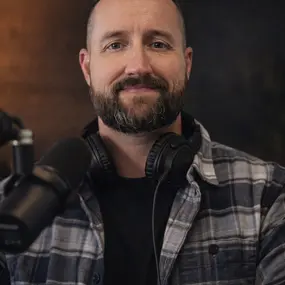
Brandon Waldorff is a Coast Guard veteran and seasoned paramedic with more than 20 years of combined service in military and civilian emergency response. Throughout his career, he has led teams, managed operations, and served on the front lines of high-pressure situations where leadership, resilience, and quick decision-making matter most.
Driven by a deep respect for service and a passion for people, Brandon brings a unique perspective shaped by real-world experience, discipline, and a commitment to continual growth. His work extends beyond emergency services into leadership development, storytelling, and exploring the lessons found in history, hardship, and the outdoors.
Through The Line and The Oath, Brandon shares insight, stories, and conversations designed to challenge, encourage, and equip others to live with purpose, strength, and faith.
Some Days, This Is Still the Best Job in the World