The Conversations We’re Here to Have
The Line and the Oath is not a site about tactics, gear, headlines, or war stories for their own sake.
It’s about the people who carry the job long after their shift ends: the cop who manages chaos all night, then sits in the driveway for ten minutes before going inside his house; the medic who performs under pressure but can’t explain why he feels numb at home; the firefighter who stays calm while everything burns, even as parts of his own life begin to catch fire. It’s about the dispatcher, corrections officer, veteran, spouse, supervisor, rookie trying to become steady, and old hand trying not to lose himself along the way.
There are plenty of places to talk about what the job requires.
This one is about what the job does to you.
Service is never just a profession. It becomes a way of carrying yourself, a way of seeing people. A way of absorbing stress and way of handling pain. It shapes your marriage, your parenting, your leadership, your sleep, your silence, your faith, your temper, your sense of purpose, and your ability to be present in rooms that don’t run on adrenaline and urgency.
It can sharpen you. It can mature you. It can give you discipline, resilience, pride, and purpose. It can also harden what was never meant to turn to stone.
That’s what The Line and the Oath is here to talk about.
Not the polished version. Not the motivational poster version. Not the version where everyone says, “check on your people” and then goes right back to rewarding burnout, emotional shutdown, and quiet self-destruction. I’m talking about the real thing: the hidden cost of service, the standards it demands, the strain it puts on a home, the kind of leadership it requires, the identity questions it forces, and the faith it either deepens or exposes.
Everything in this blog will fall under six subject areas. Not because I needed six neat boxes for blog posts, but because these are six conversations I believe our world desperately needs to have.
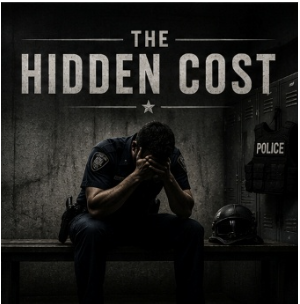 The Hidden Cost
Some of the worst damage in this life doesn’t leave a visible wound.
The Hidden Cost is where we talk about what prolonged service takes from people when
no one is looking. The accumulated stress. The emotional shutdown. The trauma that
doesn’t look dramatic enough to earn concern but still quietly changes the way you think,
feel, sleep, react, and connect. The habits that help you survive the job while slowly
poisoning the rest of your life.
This is where we’ll talk about burnout, suppressed grief, irritability, hypervigilance, isolation, bitterness, emotional numbness, and the long-term toll of carrying too much for too long without ever setting it down. A lot of people in this world know how to function while falling apart. They know how to laugh, perform, show up, and keep the wheels on while something inside them is grinding itself to dust. That kind of damage deserves better than a shrug and a dark joke.
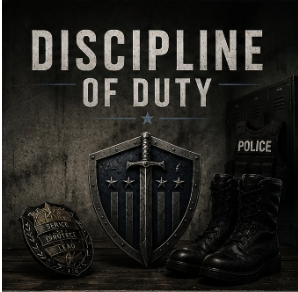 Discipline of Duty
Duty can forge a person into something strong. It can also teach him to confuse self-
neglect with strength.
Discipline of Duty is about standards, work ethic, responsibility, sacrifice, professionalism,
and the internal structure required to carry a hard calling well. It’s about doing difficult
things on purpose. Showing up when you don’t feel like it. Taking pride in beingdependable. Building a life that can bear weight.
It’s also about the danger that comes when duty becomes your only operating system. When “I’ll handle it” becomes your personality. When responsibility becomes a hiding place. When being the one everyone can count on turns into the reason you never admit you’re tired, never ask for help, never slow down, and never stop to ask what this pace is costing you.
Discipline matters. Duty matters. Standards matter. However, if you don’t know where duty ends, eventually it will eat everything around it and call that devotion.
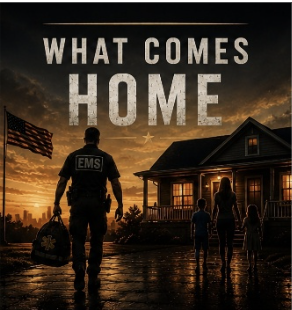 What Comes Home
Nobody leaves the job at work as cleanly as they pretend.
What Comes Home is about the spillover. The mood that follows you through the front
door. The silence your spouse has learned to read. The short temper, the checked-out stare,
the need for control, the inability to relax, the way the house starts adjusting itself around
whatever the job has turned you into this week.
This category is about marriage, parenting, emotional availability, communication, and the hidden burden families carry when one person in the house lives under constant stress and never really comes all the way home. We’ll talk about spouses who feel like they live with a stranger after a bad shift. Kids who learn when not to ask questions. Homes that become recovery rooms instead of places of connection. We’ll also talk about rebuilding, about learning how to be present, how to speak honestly, how to stop making the people you love absorb the emotional
leftovers of every scene, every call, every shift, and every unresolved thing you refuse to face. The uniform doesn’t stay in the truck. The oath doesn’t stop at the driveway.
The job comes home. We’re going to talk about what that means.
 Command and Character
Rank can give you authority. Character is what keeps that authority from rotting you.
Command and Character is about leadership, integrity, humility, courage, example, and the
private habits that eventually become public leadership. It’s for the officer, the supervisor, the senior medic, the chief, the sergeant, the field training officer, the veteran in the room, and anyone else who has people watching the way they lead, speak, correct, carry pressure, and handle power. This is where we’ll talk about what good leadership actually looks like when the people under you are younger, different, less seasoned, less stable, or less motivated than you
want them to be. We’ll talk about leading without contempt, correcting without ego, setting standards without becoming hollow, and staying teachable even after experience has made you dangerous in all the right and wrong ways. We’ll also talk about the private failures that wreck public leadership, such as dishonesty, cowardice, insecurity, ego, hypocrisy, and the slow drift that happens when someone gets more committed to image than truth. Leadership is not command presence. It’s not volume. It’s not a patch, a title, or a parking spot. It’s who you are
when nobody is watching and what the people around you become because you were there.
 Beyond the Badge
One of the most dangerous things a person can do in service is forget who he is without the
role.
Beyond the Badge is about identity outside the profession. It’s about what happens when
the patch, title, rank, or uniform has done such a good job of defining you that you no
longer know who you are without it. It’s for the veteran trying to find a new tribe after
leaving the military. The first responder who’s staring down retirement. The leader who has spent decades being needed and has no idea what to do when the calls stop coming. The man who built his whole self-concept around being useful in a uniform.
This is where we’ll talk about transition, purpose, grief, reinvention, meaning, and the hard work of building a life that still has weight after the role changes or ends. The badge matters. The work matters. The mission matters, but if your entire identity is built on what you do in uniform, then eventually the loss of that uniform will feel like the loss of yourself. That’s too much power to hand any profession.
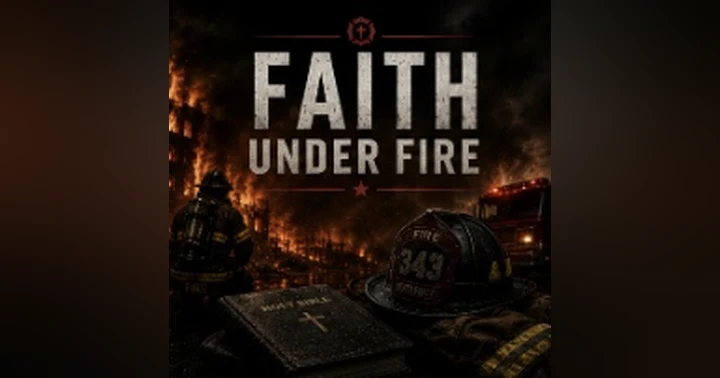
 Faith Under Fire
It’s easy to talk about faith when life is calm. Service has a way of revealing what you
actually believe.
Faith Under Fire is where we talk about God, suffering, endurance, fear, doubt, conviction,
and the spiritual life of people who serve in hard places. Not in polished church language. Not in clichés. Not in tidy answers that collapse the moment real pain enters the room.
This is where we’ll talk about what it means to keep faith when you’ve seen too much, carried too much, buried too much, or prayed too long without getting the answer you wanted. It’s for the believer who still trusts God but feels tired. The one who is angry and ashamed of it. The one trying to reconcile a good God with trauma, evil, senseless loss, and years of exposure to the worst moments of other people’s lives. We’ll talk about Scripture, suffering, courage, calling, repentance, perseverance, and the kind of faith that survives contact with reality. Not performative or borrowed faith. Not “everything happens for a reason” faith.
Tested faith. Honest faith. Faith under fire.
What I Want This Place to Be
To every Soldier, Sailor, Marine, Airman, Coast Guardsman, Veteran, Police Officer, Firefighter, Paramedic, EMT, EMR, Dispatcher, and anyone who supports and sustains us,
Thank you for taking the time to read this. I want this site to be useful to the people who serve and to the people who love them. I want it to respect the job without worshipping it. To honor service without pretending service is harmless. To tell the truth about what this life can build in a person and what it can break in him if he or she is not paying attention. I want it to challenge leaders, steady families, sharpen younger responders, and put language to the struggles a lot of good men and women have spent years carrying in silence.
Some of what is written here will encourage you. Some of it will confront you. Some of it may hit close enough to make you uncomfortable. Good.
The line of work we come from does not need more polished nonsense. It needs honesty. It needs language for the cost. It needs standards without posturing, leadership without ego, faith without performance, and conversations that don’t end at “suck it up” or “take care of yourself” like either one is a complete answer. If you wear the uniform, have worn it, love someone who does, or are still trying to understand what service has taken from you and what it’s made of you, that’s what this place is for. These six subject areas are how we’re going to do it. Not by pretending the weight isn’t real. Rather, we will look it in the face and talk about it anyway.
Brandon Waldorff

Host
Brandon Waldorff is a Coast Guard veteran and seasoned paramedic with more than 20 years of combined service in military and civilian emergency response. Throughout his career, he has led teams, managed operations, and served on the front lines of high-pressure situations where leadership, resilience, and quick decision-making matter most.
Driven by a deep respect for service and a passion for people, Brandon brings a unique perspective shaped by real-world experience, discipline, and a commitment to continual growth. His work extends beyond emergency services into leadership development, storytelling, and exploring the lessons found in history, hardship, and the outdoors.
Through The Line and The Oath, Brandon shares insight, stories, and conversations designed to challenge, encourage, and equip others to live with purpose, strength, and faith.
Some Days, This Is Still the Best Job in the World