The Oath
A Promise That Is Measured by Actions Rather Than Words
An oath is one of the oldest traditions in public service. Long before modern uniforms, radios, apparatus, or technology existed, individuals accepted positions of responsibility by publicly declaring their commitment to something greater than themselves. The words varied across nations, professions, and generations, but the purpose remained remarkably consistent: to establish that authority without integrity is meaningless and that service carries obligations extending beyond personal interest.
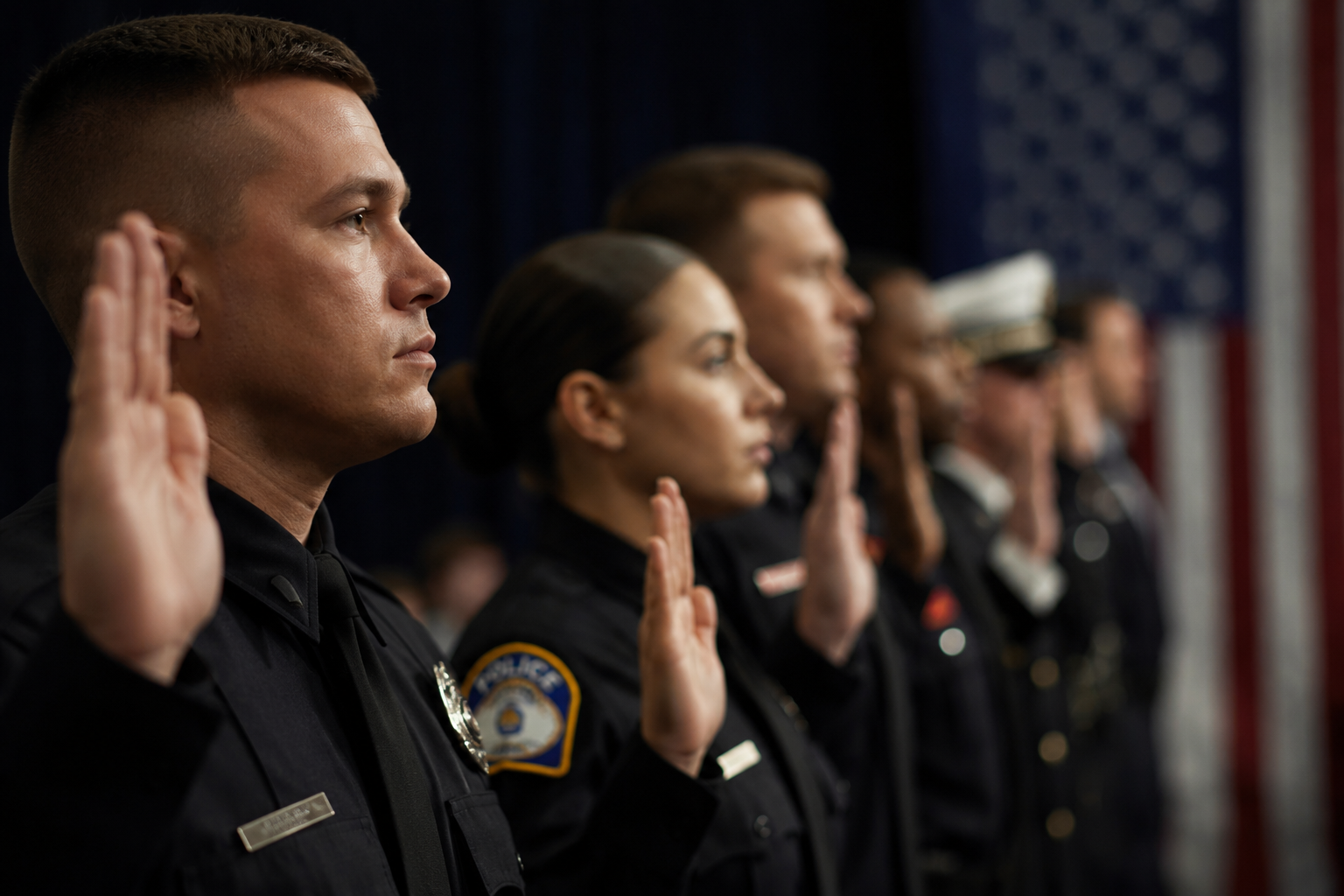
Today, nearly every profession within public safety and the military begins with a similar moment. Recruits stand before family members, instructors, agency leaders, or fellow graduates and repeat a series of carefully chosen words. Cameras capture the occasion, badges are pinned, certificates are presented, and careers officially begin.
For many, it is remembered as a milestone.
In reality, it is an introduction.
The oath is not completed when the final words are spoken. It begins at that moment and continues throughout an entire career, shaping decisions that no ceremony could ever predict.
Unlike a badge, an oath cannot be polished. Unlike a uniform, it cannot be worn only during working hours. It exists only through conduct. Every report written honestly, every difficult conversation handled professionally, every patient treated with dignity, and every decision made when no one else is watching becomes an opportunity to either honor or diminish that original promise.
This is what separates an oath from a formality.
It is a living standard.
The Quiet Moments That Define a Career
Public attention naturally gravitates toward extraordinary events. Communities remember dramatic rescues, large-scale disasters, acts of bravery, and moments that capture national headlines. Those events deserve recognition, but they represent only a fraction of professional life.
Most careers are built in ordinary moments.
They are built when a paramedic takes the time to comfort a frightened patient long after the emergency has ended. They are built when a firefighter carefully explains a smoke detector installation to a family, knowing that the conversation may prevent a tragedy years later. They are built when a police officer chooses patience over frustration or when a dispatcher remains calm enough to guide a caller through the worst day of their life.
None of these moments will receive awards or media attention.
Yet they define the profession far more accurately than the rare moments of public recognition.
The oath is tested not by extraordinary circumstances but by ordinary decisions repeated thousands of times over the course of a career.
Public Trust Is Earned Daily
Every profession depends on public confidence, but few rely on it as completely as public safety.
Communities invite firefighters into their homes during moments of crisis. Patients trust medical professionals with deeply personal information. Citizens expect law enforcement officers to exercise authority fairly and responsibly. Military personnel are entrusted with responsibilities whose consequences extend far beyond individual communities.
This trust is neither automatic nor permanent.
It is earned through consistency.
The public rarely remembers every successful call or routine interaction, but it remembers professionalism. It remembers honesty. It remembers compassion shown during moments of vulnerability.
Conversely, a single failure of integrity can damage confidence that took decades to establish.
For this reason, the oath is not simply a promise made to an employer or an agency. It is a promise made to every community that depends upon those who serve.
Leadership Before Rank
Some of the most influential leaders never held the highest position within an organization.
Every station, department, unit, and agency has individuals whose example quietly shapes the culture around them. They arrive prepared, maintain standards without being asked, mentor new members without seeking recognition, and accept responsibility without shifting blame.
They understand that leadership is demonstrated long before it is assigned.
New employees watch how experienced professionals speak to patients, interact with families, treat coworkers, and handle mistakes. Those observations become informal lessons that influence an entire generation of public servants.
An organization's written values matter.
Its lived values matter even more.
The oath is transmitted in this way as much as it is spoken during graduation ceremonies. It becomes part of a professional culture that is reinforced every day through consistent example.
The Responsibility to Preserve Tradition
Every generation inherits knowledge that was developed through experience, sacrifice, and occasionally tragedy.
Standard operating procedures are often written because someone identified a safer way to perform a task. Honor Guard traditions exist because communities recognized the importance of dignified remembrance. Challenge coins, memorials, badges, and ceremonies serve as tangible reminders that public service is connected across time.
Preserving these traditions is not an exercise in nostalgia.
It is an act of stewardship.
Future generations deserve access to the lessons, values, and experiences that shaped those who came before them. They deserve mentors willing to share knowledge rather than guard it and leaders who understand that professionalism requires both respect for tradition and openness to thoughtful improvement.
An oath is therefore more than an individual promise.
It is a commitment to leave the profession stronger than it was found.
The Oath Beyond Retirement
The end of a career does not necessarily mark the end of service.
Retired firefighters continue teaching recruits. Former military members mentor young leaders. Experienced paramedics instruct continuing education courses and volunteer within their communities. Honor Guard members dedicate countless hours to memorial ceremonies long after leaving full-time employment.
Titles change.
Assignments end.
The commitment remains.
Perhaps this explains why so many public servants struggle to describe retirement as simply "not working anymore." Service is rarely confined to a schedule. It becomes part of identity, shaping the way individuals lead families, support communities, and guide future generations.
The oath follows them because it was never intended to exist only during active employment.
It becomes part of character.
A Promise Renewed Every Day
No profession can eliminate mistakes, uncertainty, or difficult decisions. Public service is inherently complex, requiring individuals to exercise judgment under pressure while balancing compassion, responsibility, and accountability.
The oath does not promise perfection.
It demands effort.
It calls for honesty when admitting mistakes is uncomfortable. It requires humility when success could easily become ego. It asks professionals to remember that every interaction represents an opportunity to strengthen or weaken the public's trust.
Most importantly, it reminds those who serve that professionalism is measured less by extraordinary accomplishments than by consistent character.
Every shift begins with new decisions.
Every call presents another opportunity to serve.
Every interaction offers another chance to fulfill a promise that was first spoken years earlier.
The words themselves may last only a few minutes.
Living them becomes the work of a lifetime.
Nobody Normal Does This For A Living.
The Line & The Oath Journal is dedicated to preserving the stories, traditions, leadership, and culture of the men and women who answer the call, ensuring that the lessons of one generation are carried forward to the next.
Host
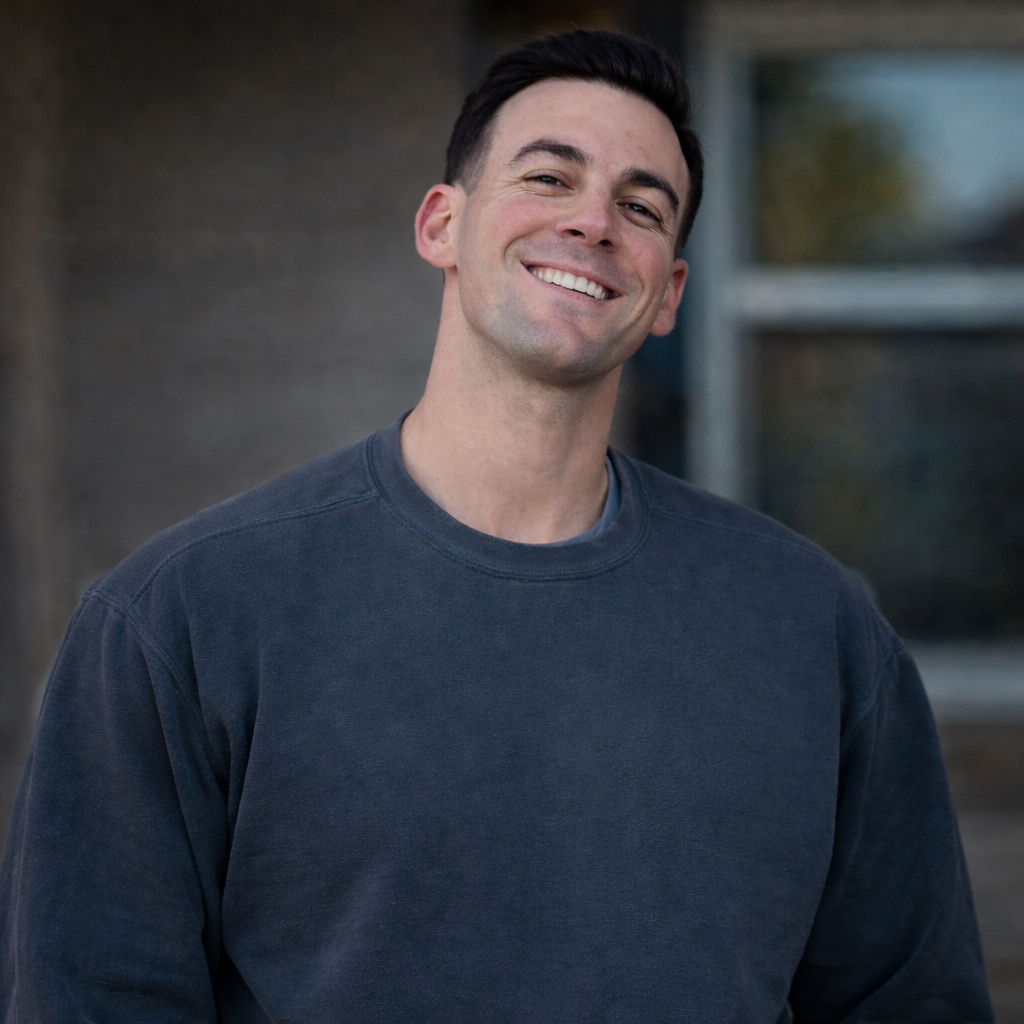
Tony Ottaviani is a critical care paramedic, emergency management professional, and host of The Line & The Oath. With a background in frontline service, leadership, and honor guard command, Antonio brings a perspective shaped by discipline, sacrifice, and the realities of life behind the uniform. His work has centered on serving others, building strong teams, and preserving the traditions and values that define first responder and military culture.
Through The Line & The Oath, Tony leads honest conversations with first responders, veterans, and servant leaders about leadership, identity, service, and the personal cost of answering the call. His goal is to create a platform that is real, grounded, and meaningful — one that speaks to those who have lived the job, those still serving, and those who believe in something bigger than themselves.
When You’re Too Angry To Pray Cleanly