The Line
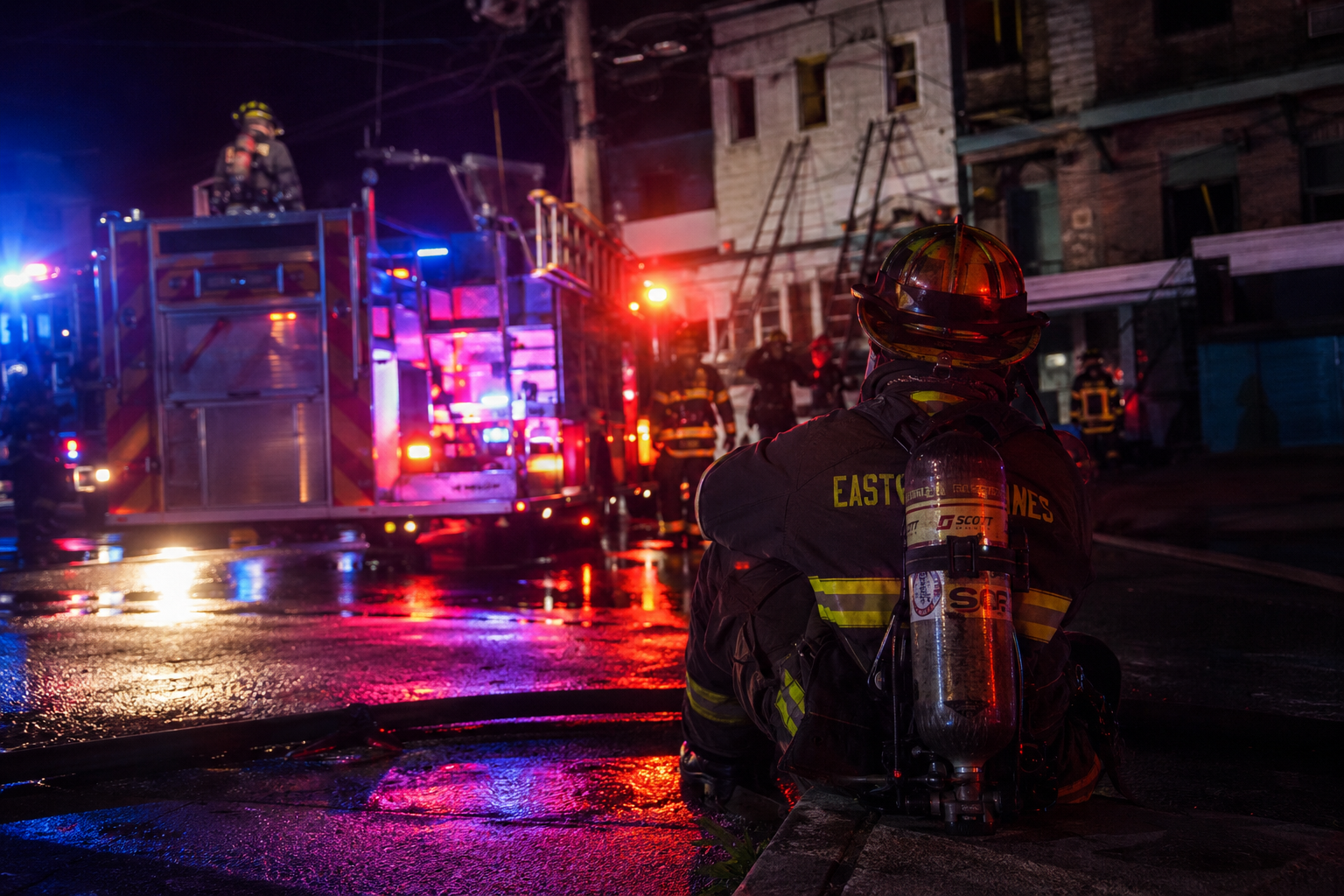
The Invisible Boundary Between Ordinary Life and Extraordinary Responsibility
There is a moment in every profession where preparation becomes performance. For pilots, it may be the moment the aircraft leaves the runway. For surgeons, it is the first incision. For attorneys, it is the beginning of oral argument before a court.
For those who serve in public safety and the military, that moment is often less defined but no less significant.
It begins with the sound of a radio, a dispatcher’s voice, a pager activation, or a simple notification that someone needs help.
One moment, life is routine. The next, an ordinary day belongs to someone else.
That transition is what we call The Line.
The Line is not a physical place, nor is it exclusive to any one profession. It is the invisible boundary between ordinary life and extraordinary responsibility. It is crossed every day by firefighters, law enforcement officers, paramedics, dispatchers, nurses, military personnel, search and rescue teams, corrections professionals, and countless others who willingly place themselves in service to their communities.
Although every discipline performs a different mission, they all share the same fundamental decision: when called upon, they step forward.
A Commitment Rather Than a Career
Public service is often described as a profession, but for many who have lived it, that description feels incomplete.
Professions can be left at the office. Responsibilities can be delegated. Careers can be changed.
Service is different.
Those who spend years responding to emergencies rarely stop viewing the world through that perspective. They notice exits when entering a room. They instinctively look toward the sound of sirens instead of away from them. They carry medical kits in personal vehicles, stop at motor vehicle accidents while off duty, and continue mentoring younger members long after retirement.
The uniform may eventually come off, but the mindset remains.
The Line is crossed so many times that it eventually becomes part of a person's identity.
This is one of the defining characteristics shared across public safety and military service. The commitment extends beyond scheduled hours and assigned duties. It becomes a way of thinking, leading, and serving that continues long after the shift has ended.
The Public Sees the Response
Communities often experience public safety through visible moments.
They see fire apparatus arriving with lights and sirens.
They see police officers directing traffic after an accident.
They see ambulances leaving emergency scenes.
They see helicopters overhead and Honor Guards standing motionless during memorial ceremonies.
These moments represent the profession, but they reveal only a small portion of it.
Behind every response are years of education, practical experience, repetitive training, and continuous evaluation. Every successful incident reflects thousands of hours spent preparing for events that everyone hopes will never occur.
The calm demonstrated during an emergency is rarely the absence of stress. More often, it is the product of disciplined preparation and trust in both training and teammates.
The Line is crossed confidently because the work before the emergency has already been completed.
The People Beside the Uniform
Public service is frequently described as a brotherhood or sisterhood, and for good reason.
Few professions require such complete trust in the people standing beside you.
Firefighters depend on crews entering hazardous environments together. Law enforcement officers rely on partners during rapidly evolving situations. Paramedics trust one another while making critical decisions with limited information. Dispatchers coordinate complex incidents involving agencies they may never physically meet.
These relationships are not built through titles or organizational charts.
They develop through shared responsibility, difficult experiences, and the understanding that every member of the team carries part of the mission.
This culture of trust extends beyond individual agencies. Mutual aid, regional partnerships, Honor Guards, specialized teams, and national organizations exist because professionals recognize that service is strengthened when knowledge and experience are shared rather than isolated.
The Line is crossed individually, but it is sustained collectively.
The Families Who Serve Without a Badge
Discussions about public service often focus on those wearing the uniform while overlooking the people who quietly support them.
Families learn that holidays may be celebrated on different dates. Children become familiar with shift schedules long before they understand them. Spouses accept interrupted dinners, late-night phone calls, and the uncertainty that accompanies emergency response.
Parents wait for messages confirming that their son or daughter is safe.
Friends understand cancelled plans and missed milestones.
Their names may never appear in an agency roster, but their support makes public service possible.
Every time someone crosses The Line, family members cross a line of their own, accepting uncertainty so that others may receive help when they need it most.
Recognizing that contribution is essential to understanding the true nature of service.
Preserving a Professional Culture
Every profession develops traditions that reinforce its values.
Challenge coins commemorate shared experiences.
Patches identify teams and organizations.
Badges represent authority and responsibility.
Honor Guards preserve dignity during moments of loss and remembrance.
These traditions are more than ceremonial customs. They create continuity between generations and remind members that they are part of something larger than themselves.
Stories serve a similar purpose.
Every experienced firefighter remembers a mentor who demonstrated professionalism under pressure. Every paramedic recalls a partner who taught an important lesson during an ordinary call. Every military member carries experiences that shape future leadership decisions.
When these stories are shared, they become part of a profession's collective knowledge.
When they are forgotten, valuable experience disappears with them.
Preserving those stories is one of the most important responsibilities any professional community can undertake.
Why The Line Matters
The Line is not intended to separate those who serve from those who do not.
Instead, it defines a shared responsibility that exists across disciplines, agencies, and generations.
It reminds us that public service is built upon preparation rather than recognition, teamwork rather than individual achievement, and responsibility rather than personal reward.
It explains why experienced professionals continue mentoring long after retirement and why Honor Guard members spend countless volunteer hours ensuring every ceremony is conducted with precision and dignity.
It explains why dispatchers remain calm while others panic and why rescue teams continue searching long after conditions become difficult.
Most importantly, it explains why people continue answering the call despite long hours, missed family events, emotional challenges, and personal sacrifice.
They do so because service is not simply something they perform.
It is something they have chosen to become.
Looking Forward
The Line & The Oath exists to document and preserve this culture of service.
Through conversations, historical perspectives, leadership discussions, and the experiences of professionals from every discipline, this Journal seeks to create a permanent record of the traditions, values, and lessons that define public safety and military service.
Every article will explore a different aspect of that mission, but they will all begin from the same understanding:
Extraordinary service is rarely the result of extraordinary people.
More often, it is the result of ordinary individuals who repeatedly choose responsibility over comfort, preparation over complacency, and service over recognition.
Every call begins with a decision.
Every career is shaped by thousands of those decisions.
Every story begins by crossing The Line.
Nobody Normal Does This For A Living.
The Line & The Oath exists to preserve the stories, traditions, leadership, and culture of the men and women who answer the call—ensuring that the lessons of one generation are passed to the next.
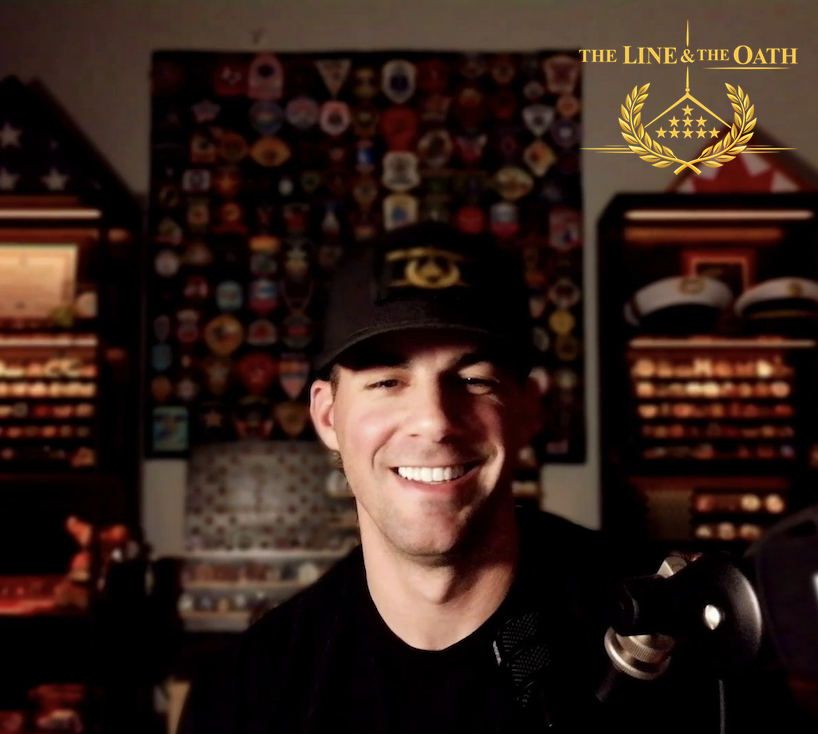
Host | Critical Care Paramedic
Tony Ottaviani is a critical care paramedic, photographer, documentary creator, and host of The Line & The Oath. With over a decade of experience in emergency services and a background in honor guard leadership, Tony brings a unique perspective to the people, traditions, and experiences behind the uniform.
His passion for documenting life beyond the uniform extends through photography, video, and interviews, capturing first responders, military personnel, and the places and moments that shape their lives.
Through The Line & The Oath, Tony is dedicated to sharing authentic conversations, preserving history, and documenting the people and experiences that deserve to be remembered.
Some Days, This Is Still the Best Job in the World